
A leaking water heater is not automatically a heater at the end of its life. Plenty of leaks come from parts that are cheap and quick to replace: a relief valve that no longer seats, a plastic drain valve that has started to weep, a supply connector with a tired gasket, or a dielectric nipple rusting at the top of the tank. Some puddles are not leaks at all but condensation, especially on a newly filled tank or a gas unit firing on a humid day. The one leak that cannot be repaired is water seeping from the steel tank, usually through the bottom or a seam. For Cary, NC homeowners, the difference between a small repair and a new heater is why diagnosis comes first.
A leak call with us starts with evidence, not guesses. The technician wipes the tank and fittings dry so fresh water shows where it starts, then checks the relief valve and its discharge line, the drain valve at the base, and every connection on top. Gas heaters get a look inside the burner area, because water there can be normal startup condensation or a sign of a tank that has failed. A relief valve that keeps releasing water means we also test pressure: static pressure above roughly 80 psi, or a missing expansion tank on a closed system, will make even a new valve drip. Findings come first; the repair follows.
Most leaks are handled the same day we find them. We replace worn relief valves, swap plastic drain valves for sturdier brass valves, rebuild corroded connections, add or recharge an expansion tank, and install a pressure-reducing valve when street pressure is the real culprit. If the tank itself is leaking, there is no safe patch, and you will hear that from us directly along with your replacement options. We also help protect your home going forward: a drain pan piped to a proper drain, a water sensor or automatic shutoff valve, and a clear label on the shutoff. For water heater leak repair in Cary, call (984) 273-8748.
Most of our service calls are for Water Heater Repair in Cary and Water Heater Replacement in Cary. Start there if you're not sure what you need.
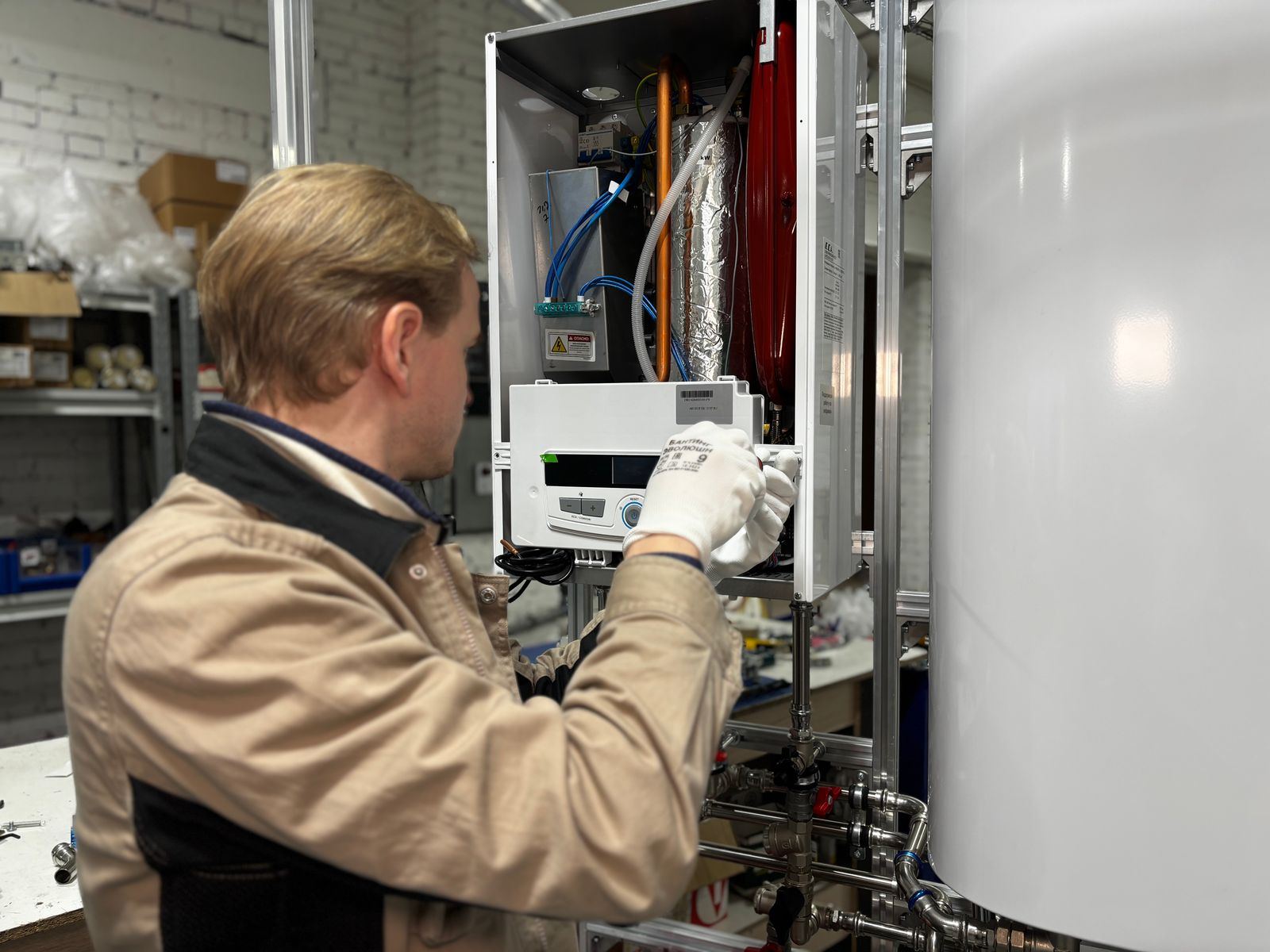
Signs You Need Water Heater Leak Repair in Cary
Water heaters usually give plenty of warning before they fail, as long as you know what to look and listen for. Watch for these telltale signs that professional help is needed:
- A puddle or damp spot on the floor around the base of the tank
- A drain valve at the bottom of the tank that drips even when closed
- Rusty or discolored hot water paired with dampness at the base
- The water meter moving when nothing in the house is running
- Mineral buildup or rust around the hot and cold connections
- Water inside the burner compartment of a gas heater
- A T&P valve line that drips or releases water now and then
- Warped baseboards or stained drywall beside the water heater
Early Action Saves Money
A little rust-colored water or a relief valve that drips now and then can be the first hint of a tank that is close to the end. If you notice any of these signs, contact Cary Water Heater at (984) 273-8748 for a prompt inspection.
Water Heater Trouble? Call Us.
Call Cary Water Heater for fast, reliable service.
Tap to Call (984) 273-8748Water Heater Leak Repair FAQ
What a Trained Technician Brings to the Job
Reading a water heater leak correctly is harder than it looks. A drip that appears to come from the bottom may start at a fitting on top and run down the jacket, and condensation on a cold tank can pass for a failing tank. Buying the wrong part is money down the drain, and missing a failing tank can lead to a much bigger flood later. There are safety concerns, too. The relief valve protects against dangerous temperature and pressure, and blocking it to stop a drip can set up a violent failure. Corroded fittings on an older tank can crack under a wrench, and electric heaters sit on 240-volt circuits that do not mix well with wet floors.
We work through leaks step by step and fix the cause along with the drip. We start by drying the unit, watch for fresh water, put a gauge on the system whenever the relief valve is involved, and check for thermal expansion problems that make valves weep. We replace valves and fittings with durable replacements, swap plastic drain valves for brass, and add an expansion tank or pressure-reducing valve when pressure is the root problem. When the tank is the problem, we say so directly and explain replacement options, including the drain pan and leak protection that can keep the next failure from turning into water damage.
How We Handle Water Heater Leak Repair
Our workflow is simple and thorough, so nothing gets missed between the fuel supply and the relief line. Here's how we handle water heater leak repair from start to finish:
Isolate the Leak
We help you close the cold supply and shut off gas or power, then move valuables and set up containment so the damage stops spreading.
Trace the Source
We dry the tank and fittings, then check the relief valve and discharge pipe, the drain valve, the top connections, and the burner area in order.
Check Pressure & Expansion
Leaks often have a cause behind the cause. Pressure above about 80 psi or a missing expansion tank gets found and corrected.
Lasting Repair
We replace the failed part, refill and purge the tank, restart the heater, and confirm every joint stays dry. A leaking tank gets an honest replacement recommendation instead.
Tips to Keep Your Water Heater Healthy
Most of the failures we see could have been delayed for years with basic upkeep. Start with these practical measures our team relies on:
- Make a habit of checking around the heater for moisture or corrosion every few weeks
- Draining sediment every year helps the bottom of the tank last longer
- Add a floor sensor or an automatic shutoff valve that closes the supply when it detects water
- An expansion tank that is present and properly charged keeps the relief valve from opening every cycle
- Replace a depleted anode rod before the steel tank becomes the next target for corrosion
- High street pressure is hard on water heaters, so a pressure test and regulator can prevent repeat drips
- A properly drained pan under the tank catches small leaks before they reach your floors
DIY vs. Professional Water Heater Leak Repair
The line between a safe DIY check and a risky repair is usually the moment you need to open a gas fitting, a vent connection, or an electrical cover. A side-by-side look:
| Consideration | Doing It Yourself | Hiring a Pro |
|---|---|---|
| Finding the Source | Replace parts until the drip stops | Leak traced to its true starting point |
| Relief Valve | Valve capped to stop the drip, a serious hazard | Root cause fixed so the new valve stays dry |
| Corroded Connections | Tightened until the fitting cracks | Corroded connections replaced with new fittings |
| False Alarms | Normal sweating treated as a leak | Condensation identified before money is spent |
| Water Damage | Damage prevention skipped | Protection added where it matters most |
| Outcome | Temporary fix that may fail again | Confirmed dry repair or honest replacement advice |
Get Water Heater Leak Repair Help Today
Don't let a failing water heater get worse. Call Cary Water Heater now for prompt, professional service.
Call (984) 273-8748 TodayWhere We Provide Water Heater Leak Repair
Our technicians handle water heater leak repair throughout Cary and the surrounding communities, with the same upfront pricing everywhere we work.